Showing posts with label Art History. Show all posts

Monday, June 20, 2022

Egon Schiele (1890-1918)


From the Kinja archive: Protege of Gustav Klimt. Early Expressionism. He ran into a bit of trouble with the authorities because of the sexual nature of his paintings. Imprisoned. Died at 28 from the Spanish Flu.

https://www.theguardian.com/artanddesign/2014/oct/10/egon-schiele-graphic-virtuoso-vienna-nudes


Seated Woman with Bent Knee. 1917.


Monday, April 4, 2022

Hieronymus Bosch


More art history from the Kinja archive.

http://www.theatlantic.com/entertainment/archive/2014/11/hieronymus-bosch/381852/

https://en.wikipedia.org/wiki/Hieronymus_Bosch

https://www.smithsonianmag.com/smart-news/newly-discovered-hieronymus-bosch-drawing-surfaces-private-collection-180957220/?no-ist

https://www.dailymail.co.uk/sciencetech/article-3130492/Not-bum-note-sight-Listen-musical-score-hidden-BUTT-man-Hieronymus-Bosch-painting-online-hit.html

https://www.nybooks.com/articles/2016/08/18/mystery-of-hieronymus-bosch/

https://www.hieronymus-bosch.org/the-complete-works.html

L'Absinthe


From the Kinja archive original text: Edgar Degas. 1875-76. Reminds me of a certain 1987 movie starring Mickey Rourke and Faye Dunaway.

https://en.wikipedia.org/wiki/L%27Absinthe

https://www.mentalfloss.com/article/69281/10-intoxicating-facts-about-edgar-degass-labsinthe

https://totallyhistory.com/labsinthe/

The Meidum Geese


Some controversy that they may not be authentic. Ancient Egypt. 

https://www.livescience.com/50309-egyptian-mona-lisa-may-be-fake.html

https://en.wikipedia.org/wiki/Nefermaat

Nefermaat's tomb is famous for the scene referred to as the "Meidum Geese" (now in the Egyptian Museum, JE 34571/ CG 1742). Discovered in 1871 by Auguste Mariette and Luigi Vassalli, the scene was executed in painted plaster. The painting was removed from the wall in order to be reassembled inside the Bulaq Museum. The full scene depicts six geese (greylaggreater white-fronted and red-breasted geese, none of which call modern Egypt home); three pointing to the left and three pointing to the right. Each group of three geese consists of one goose shown with head bowed down, eating, and two geese with heads held up. Each group of three animals represents many geese, as three represents the plural in Egyptian imagery. There are differences in the plumage of the birds that breaks the overall symmetry of the scene. This example of Egyptian painting is considered a masterpiece. A 2015 research paper by Francesco Tiradritti at the Kore University of Enna, published on LiveScience, suggested that the painting could be a nineteenth-century forgery, possibly made by Vassalli. Tiradritti's claims were promptly dismissed by Zahi Hawass and other Egyptian authorities

https://news.artnet.com/art-world/extinct-goose-egypt-mona-lisa-1947028 

https://www.smithsonianmag.com/smart-news/4600-year-old-egyptian-painting-may-show-extinct-goose-180977101/

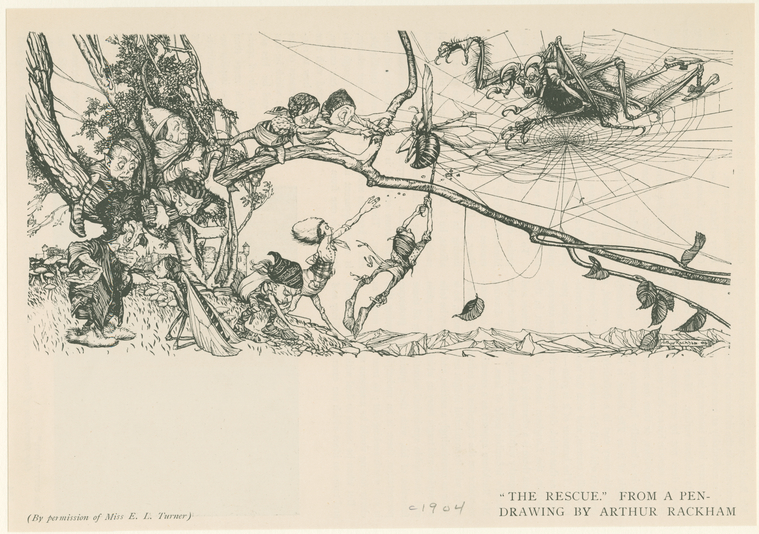
The Rescue


c1904. Arthur Rackham. I do have an art history file in the Kinja archive. About 26 entries. 

https://digitalcollections.nypl.org/items/69f66a5a-5266-b6e1-e040-e00a18064ca8

Sunday, April 3, 2022

Skeletons Warming Themselves (1889)


https://en.wikipedia.org/wiki/James_Ensor

Our own spaced99 inadvertently reminded me that there has been very few art history posts on this blogspot version of The Golden Horn. It was a topic of some note on Kinja Golden Horn. Because I wanted a little bit of highbrow content to balance out the lowbrow. The Kinja Art History tagline was "We've got culture coming out of our ass." That's a line from the library scene in Seven. James Ensor liked skeletons and masks in his work. 

Thursday, January 2, 2020

William the Hippo


Egypt. Faience.

https://en.wikipedia.org/wiki/William_the_Faience_Hippopotamus

https://www.metmuseum.org/about-the-met/curatorial-departments/egyptian-art/william-100

In 1917, The Metropolitan Museum of Art acquired a small ancient Egyptian faience hippopotamus. Created in a captivating blue, the little hippo quickly won people’s hearts. He received his now-famous nickname, William, in 1931. Today he is the informal mascot of the Museum, beloved by museum-goers around the world.