
- Detroit Publishing Co., copyright claimant
- Detroit Publishing Co., publisher
- c[1906]
- https://www.loc.gov/item/2016806003/

From the Kinja archive. Panorama of the Mississippi. Made him a rich man. I know these panoramas from “All Pieces of a River Shore” by R.A. Lafferty.
https://en.wikipedia.org/wiki/John_Banvard
https://strangeco.blogspot.com/2017/10/the-folly-of-john-banvard.html
https://www.neatorama.com/2017/10/13/John-Banvards-Three-Mile-Panorama/


- A tradecard or printed signboard for caricature publisher Henry R. Robinson. The image of an eighteenth-century wig is surely a pun on Robinson's Whig political alignment. The print must have been produced between 1834, when the major anti-Jacksonian party was christened "Whig," and 1842, when Robinson removed to other premises. Given the prominence of the address on the work, the print may have been used in some way to mark the exterior of the shop. However, it does not appear in a published view of Robinson's storefront: his small, undated business card in the American Antiquarian Society.

The Sandbar Fight, also known as the Vidalia Sandbar Fight, was a formal one-on-one duel that erupted into a violent brawl involving a number of combatants on September 19, 1827. It took place on a large sandbar in the Mississippi River, a few miles north of Vidalia, Louisiana and Natchez, Mississippi. The fight resulted in the death of General Samuel Cuny and Major Norris Wright. American pioneer and folk hero James Bowie survived, but was seriously injured in the fight.
https://en.wikipedia.org/wiki/Sandbar_Fight
Duel
- On Wednesday, September 19, 1827, at midday, Wells and Maddox, accompanied by their seconds and supporters, met on a sandbar near the town of Natchez, Mississippi. Jim Bowie supported Wells, while Norris Wright favored Maddox. In total, 17 named men were present. The Wells party arrived first by a small boat from the Louisiana shore. The Maddox party and local observers then arrived by horse from a nearby Mississippi plantation house, fording a bayou. The duel was conducted by formal rules of the time, with a lengthy delay between exchanges of fire. The noncombatant witnesses (including the surgeons) kept a reasonable distance from the duel for the duration of the fight.
Wells and Maddox each fired two shots, and as neither man was injured, resolved the formal duel with a handshake.
Brawl
- At the conclusion of the initial duel, the party of six (Wells, Maddox, McWorter, Crain, Dr. Cuny, and Dr. Denny) prepared to celebrate survival. They walked towards the remaining Maddox partisans, because no participant of the duel had a violent relationship with that group. The duel participants were balanced in number (three each) and unarmed with the exception of the seconds. Crain carried a loaded pistol in each hand. The duel participants were intercepted by the remaining Wells partisans; Crain now faced three additional armed men. Seeing this from a distance, the remaining Maddox partisans began running forward to join the group. General Cuny, who had previously fought with Crain, is recorded as having called out to him, "Col. Crain, this is a good time to settle our difficulty." Crain fired, missing Cuny but striking Bowie in the hip and knocking him to the ground. Cuny and Crain then exchanged fire, with Crain sustaining a flesh wound in the arm and Cuny dying from a shot to the chest or thigh.
Bowie, rising to his feet, drew his knife and charged at Crain, who struck him so hard upon the head with his empty pistol that it broke and sent Bowie to his knees. Wright appeared, drew a pistol, and shot at the fallen Bowie, missing. Wright then drew his sword cane and stabbed Bowie in the chest, but the thin blade was deflected by his sternum. As Wright attempted to pull the blade free, Bowie reached up, grabbed his shirt, and pulled him down upon the point of his Bowie knife. Wright died quickly and Bowie was shot again and stabbed by another member of the group. As Bowie stood, both Blanchard brothers fired at him, and he was struck once in the arm. Bowie spun and cut off part of Alfred's forearm; Carey fired a second shot at Bowie, but missed. As the Blanchard brothers fled, Alfred was shot "through the arm" by Jefferson Wells, while Carey was shot at by Major McWorter "without effect".
The brief (90-second) brawl left Samuel Cuny and Norris Wright dead, and Alfred Blanchard and Jim Bowie badly wounded. The unarmed Dr. Denny was shot in a finger and a thigh. Others may have suffered minor injuries; Crain claimed that a bullet "grazed the skin" of his arm.
Crain helped carry Bowie away, with Bowie recorded as having thanked him, saying, "Col. Crain, I do not think, under the circumstances, you ought to have shot me." One doctor reputedly said, "How he [Bowie] lived is a mystery to me, but live he did." The five doctors who had been present for the duel managed to patch Bowie's wounds. The dead and wounded (at least, and perhaps all partisans) promptly crossed the river by boat soon after the death of General Cuny.
- The Gunfight at Blazer's Mill (April 4, 1878) was a shootout between what were known as the Lincoln County Regulators and buffalo hunter Buckshot Roberts.
https://en.wikipedia.org/wiki/Gunfight_at_Blazer%27s_Mill
The Regulators, including Billy the Kid, Charlie Bowdre, and led by Richard "Dick" Brewer, were in the process of hunting down anyone believed to have been associated with the murder of John Tunstall, which had sparked the Lincoln County War. Roberts had been implicated in crimes associated with the "Murphy-Dolan" faction, but in reality it is believed he wanted nothing to do with the ongoing range war.
Blazer's Mill was located on a hillside between Lincoln, New Mexico and Tularosa, and was owned by Dr. Joseph H. Blazer, a dentist. The area included a large two-story house, a large square office building, a sawmill, a grist mill, several one story adobe structures and houses, a post office, a general store, and a number of corrals and barns. Three days earlier, the Regulators had killed Sheriff Brady and Deputy Hindman, and were in Blazer's Mill to have a good meal at Mrs. Godfrey's Restaurant. (See Dead Right: the Lincoln County War. Clifford Caldwell)
The Regulators known to be present that day included Brewer, Bowdre, William McCarty (aka Billy the Kid), Doc Scurlock, Frank McNab, George Coe, Frank Coe, John Middleton, Jim French, Henry Newton Brown, Fred Waite, and several lesser-known others.
Buckshot Roberts wanted no part in the Lincoln County War and had made plans to leave the area, selling his ranch and waiting for the check from his buyer. On the day in question, Roberts rode his mule into Blazer’s Mills, a sawmill and trading post located on the Rio Tularosa. Looking to collect his check, he was shocked to discover that the entire upper echelon of the Regulators were eating lunch in a nearby building. They had left the area around Lincoln, New Mexico after killing Sheriff Brady just three days earlier. One of them, Frank Coe, sat with Roberts on the steps of the main house and tried to talk him into surrendering. The old gunman refused, believing he would be killed by the vengeful cowboys.
Regulator chief Dick Brewer grew impatient with the stand-off and sent a few of his men outside to take Roberts into custody. At the sight of the armed, quickly walking cowboys, Roberts jumped up, aiming his Winchester. Both he and Charlie Bowdre fired at the same time. Roberts was struck in the stomach while his shot hit Bowdre’s belt buckle, severing his gun belt and knocking the wind from him. Dangerously wounded, Roberts kept pumping bullets at the Regulators as he retreated to the doorway. John Middleton was seriously wounded in the chest. One slug grazed Doc Scurlock and another struck George Coe in the right hand, costing him his trigger finger. Once Roberts' rifle clicked empty, Billy the Kid dashed from cover to finish off the wounded gunman, only to be knocked senseless by the barrel of the Winchester.
Barricading himself in the house, Buckshot Roberts ignored both his painful wound and the Regulators’ gunshots, armed himself with a single-shot .50-70 Government Springfield rifle belonging to Blazer (one source claims it was a Sharps rifle which belonged to Dr. Appel) and readied himself for a fresh onslaught. Stunned by the turn of events, the Regulators tended to their wounded and tried to get Roberts to come out. Frustrated that none of his men dared to approach the fortified adversary, Brewer circled around the main house, and took cover behind some stacked logs and opened fire on the room where the wounded man was lying prone on a mattress in front of the barricaded doorway. Roberts, seeing the cloud of gun smoke from the log pile, opened fire when Brewer put his head up again, striking the cowboy in the eye. The Regulators, demoralized by their casualties, pulled out and left the area. Buckshot Roberts died the next day and he and Dick Brewer were buried side by side near the big house where the gunfight occurred.

- a famous gun fight that occurred on April 14, 1881, on El Paso Street, in El Paso, Texas.
https://en.wikipedia.org/wiki/Four_Dead_in_Five_Seconds_Gunfight
Marshal Dallas Stoudenmire, a noted gunfighter who had only started as town marshal on April 11, was present in the court room. After the court adjourned, he walked across the street for dinner. Constable Krempkau went to a saloon next door to retrieve his rifle and pistol. There, a confrontation took place with George Campbell over remarks he allegedly made about Krempkau’s translations and his apparent friendship with the Mexicans. John Hale, who was reportedly unarmed, was heavily intoxicated and was also upset with Krempkau’s involvement in the matter. Hale grabbed one of Campbell's two pistols and yelled, "George, I've got you covered!" He then shot Krempkau, who reeled backward. Slumping against a saloon door, Krempkau drew his own pistol.
Marshal Stoudenmire heard the shot, jumped up from his dining chair at the Globe Restaurant, pulled out his pistols, and ran out into the street. While running, Stoudenmire fired wildly, killing Ochoa, an innocent Mexican bystander who was running for cover. As the first shot was heard, John Hale jumped behind a thick adobe pillar. When he peered out from behind the pillar, Stoudenmire fired and struck Hale between the eyes, killing him instantly.
Campbell stepped from cover with his pistol drawn, saw Hale lying dead, and yelled to Stoudenmire that this was not his fight. However, Constable Krempkau, mistakenly believing that Campbell had shot him, then fired his pistol twice at Campbell before losing consciousness from loss of blood. Krempkau's first bullet struck Campbell's gun and broke his right wrist, while the second hit him in the foot. Campbell screamed in pain and scooped up his gun from the ground with his left hand. Stoudenmire whirled away from Hale and instantly fired at Campbell, who dropped his gun again, grabbed his stomach and collapsed onto the ground. Stoudenmire walked slowly toward Campbell and glared at him. In agony, Campbell yelled, "You big son of a bitch! You murdered me!" Stoudenmire said nothing. Both Campbell and Krempkau died within minutes.
After just a few seconds, four men lay dead or dying. Three Texas Rangers were standing nearby, but did not take part, saying later that they felt Stoudenmire had the situation well in hand.

April 5, 1879. My Wiki rabbit hole recently was outlaws and gunfighters of the Old West. And mountain men was how it started.
https://en.wikipedia.org/wiki/Long_Branch_Saloon_gunfight
On April 5, 1879, Richardson strode into the Long Branch Saloon specifically looking for Loving. Loving, however, was not there at that time. Richardson settled into a game of poker. Around 9:00 p.m., Loving entered the bar, this time armed. Loving took a seat at a long table, at which point Richardson moved over and sat across from him. The two men could be heard talking low to one another, but what was said could not be understood. Suddenly, Richardson said loudly "You wouldn't fight anything, you damned son of a bitch," to which Loving said calmly, "Try me and see."
Richardson stood and drew his gun, which prompted Loving to do the same. Both men fired their weapons repeatedly, with Richardson firing five rounds and Loving firing six. When the shooting stopped, Richardson had been shot in the chest, the side, and the arm. Loving was grazed on the hand by one bullet, but otherwise was uninjured. Town Marshal Charlie Bassett quickly responded, having heard the shots, but Deputy Marshal Duffey arrived first, and took hold of Richardson as he crumpled to the floor. No one else in the saloon was injured. Loving was arrested as was standard procedure in such a case. On April 7, 1879, a coroners inquest ruled the shooting self defense, and Loving was released without charges. The Globe newspaper said of the fight; "...it seemed strange that Loving was not hit, except for a slight scratch on the hand, as the two men were so close together that their pistols almost touched each other..."

- The Burning of Norfolk was an incident that occurred on January 1, 1776, during the American Revolutionary War. British Royal Navy ships in the harbor of Norfolk, Virginia, began shelling the town, and landing parties came ashore to burn specific properties.
https://en.wikipedia.org/wiki/Burning_of_Norfolk
https://www.theclio.com/tour/292/9
https://www.loc.gov/item/2018664467/
- Cannon ball lodged in wall of St. Paul's Church, Norfolk, Virginia - fired by Lord Dunmore on New Year's Day, 1776 [1907]


https://en.wikipedia.org/wiki/October_26
1881 – Wyatt Earp and Doc Holliday participate in the Gunfight at the O.K. Corral in Tombstone, Arizona.
.jpg/800px-Viaducto_del_Malleco_(Puente_Ferroviario).jpg)

From the Kinja archive: Protege of Gustav Klimt. Early Expressionism. He ran into a bit of trouble with the authorities because of the sexual nature of his paintings. Imprisoned. Died at 28 from the Spanish Flu.
https://www.theguardian.com/artanddesign/2014/oct/10/egon-schiele-graphic-virtuoso-vienna-nudes


From the Kinja archive original text: Edgar Degas. 1875-76. Reminds me of a certain 1987 movie starring Mickey Rourke and Faye Dunaway.
https://en.wikipedia.org/wiki/L%27Absinthe
https://www.mentalfloss.com/article/69281/10-intoxicating-facts-about-edgar-degass-labsinthe

Some controversy that they may not be authentic. Ancient Egypt.
https://www.livescience.com/50309-egyptian-mona-lisa-may-be-fake.html
https://en.wikipedia.org/wiki/Nefermaat
Nefermaat's tomb is famous for the scene referred to as the "Meidum Geese" (now in the Egyptian Museum, JE 34571/ CG 1742). Discovered in 1871 by Auguste Mariette and Luigi Vassalli, the scene was executed in painted plaster. The painting was removed from the wall in order to be reassembled inside the Bulaq Museum. The full scene depicts six geese (greylag, greater white-fronted and red-breasted geese, none of which call modern Egypt home); three pointing to the left and three pointing to the right. Each group of three geese consists of one goose shown with head bowed down, eating, and two geese with heads held up. Each group of three animals represents many geese, as three represents the plural in Egyptian imagery. There are differences in the plumage of the birds that breaks the overall symmetry of the scene. This example of Egyptian painting is considered a masterpiece. A 2015 research paper by Francesco Tiradritti at the Kore University of Enna, published on LiveScience, suggested that the painting could be a nineteenth-century forgery, possibly made by Vassalli. Tiradritti's claims were promptly dismissed by Zahi Hawass and other Egyptian authorities
https://news.artnet.com/art-world/extinct-goose-egypt-mona-lisa-1947028
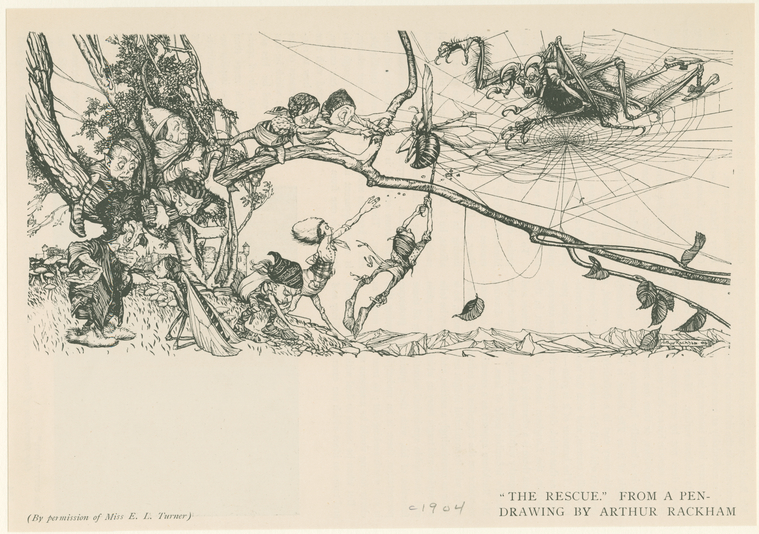
c1904. Arthur Rackham. I do have an art history file in the Kinja archive. About 26 entries.
https://digitalcollections.nypl.org/items/69f66a5a-5266-b6e1-e040-e00a18064ca8

https://en.wikipedia.org/wiki/James_Ensor
Our own spaced99 inadvertently reminded me that there has been very few art history posts on this blogspot version of The Golden Horn. It was a topic of some note on Kinja Golden Horn. Because I wanted a little bit of highbrow content to balance out the lowbrow. The Kinja Art History tagline was "We've got culture coming out of our ass." That's a line from the library scene in Seven. James Ensor liked skeletons and masks in his work.

The Affair of the Diamond Necklace was an incident from 1784 to 1785 at the court of King Louis XVI of France that involved his wife, Queen Marie Antoinette.
The Queen's reputation, already tarnished by gossip, was ruined by the false implication that she had participated in a crime to defraud the Crown's jewellers in acquiring a very expensive diamond necklace she then refused to pay for. In reality, she rejected the idea of buying it only to have her signature forged by Jeanne de Valois-Saint-Rémy. Although Jeanne was later convicted, the event remains historically significant as one of many that led to the French disillusionmen
https://www.history.com/news/marie-antoinette-diamond-necklace-affair-french-revolution
https://en.wikipedia.org/wiki/Affair_of_the_Diamond_Necklace
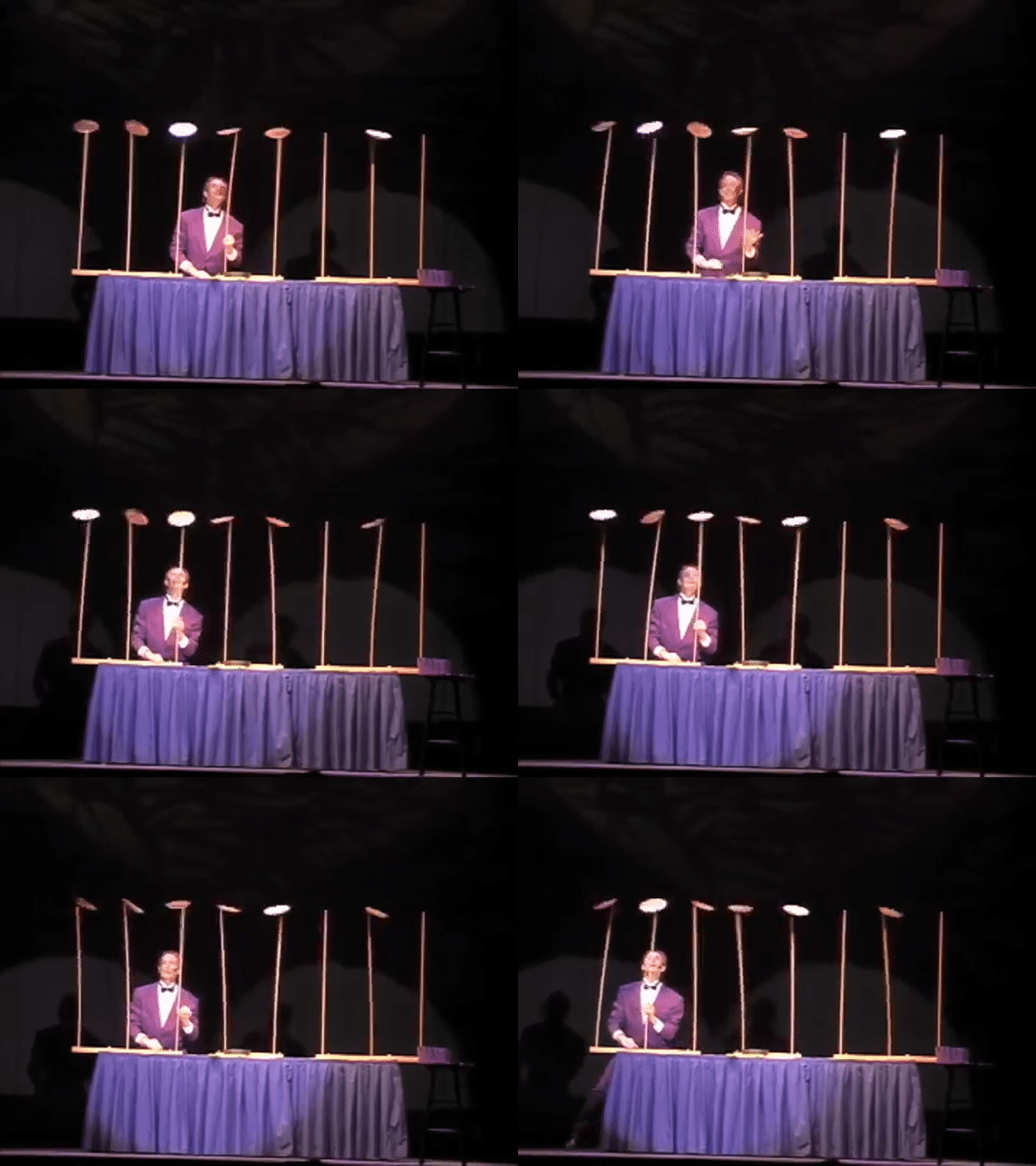
I always found history topics to be hard but this turned out to be a good series. Because they are actually interesting. Most of my posts aren't all that interesting. They lack a filmic nutrition, as our friend spaced99 would say.
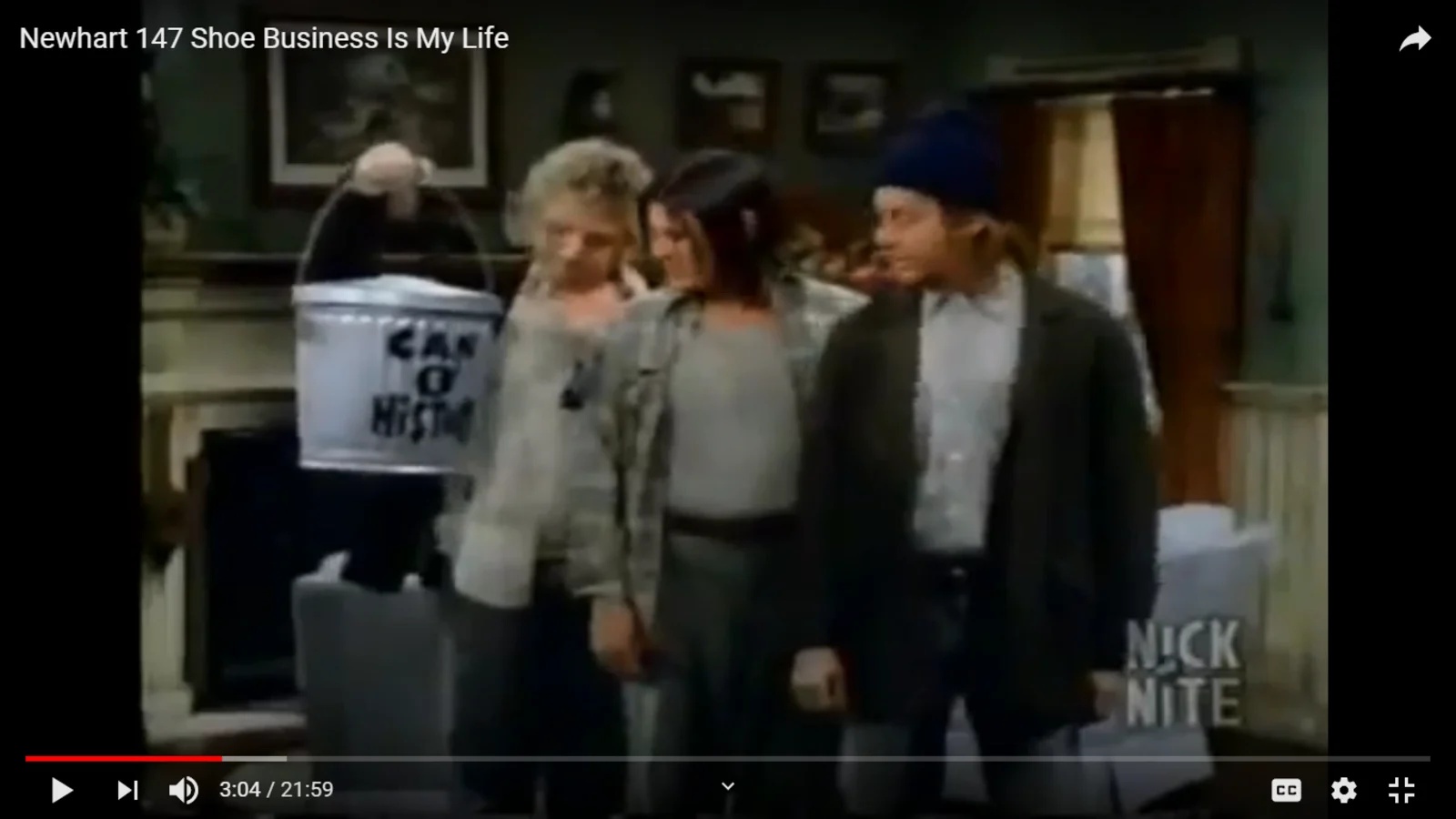
Short history topics I found without much meat to them I would put in the Can O' History, which was the little garbage can time capsule Larry, Darryl, and Darryl had on Newhart. One day I was at a friend of mine's house and he had a little fire pit outside and sitting next to it was that little metal garbage can. I freaked out and said, "Where did you get that garbage can?!" "Why?", he suspiciously asked. "That's the Can O' History!"
Can O' History topics include: Pole Sitting, Plate Spinning, Jo-Jo the Dog-Faced Boy, The Shootout on Juneau Wharf, Napoleon Attacked by Rabbits, S.S. America: The Ship of Gold, T.E. Lawrence and Carchemish, U.S. Camel Corps, Locusta the Poisoner, What is a Clipjoint?, Ascent of the Eiger, Bal de Ardents, Great New England Hurricane of 1938, Codex Gigas - The Devil's Bible, Republic of West Florida.
https://www.imdb.com/title/tt0660009/
https://thegoldenhornblog.blogspot.com/search/label/Can%20O%27%20History

Baton Rouge was briefly a part of this short-lived Republic.
https://en.wikipedia.org/wiki/Republic_of_West_Florida
https://www.al.com/news/mobile/2017/06/how_alabama_got_cheated_out_of.html

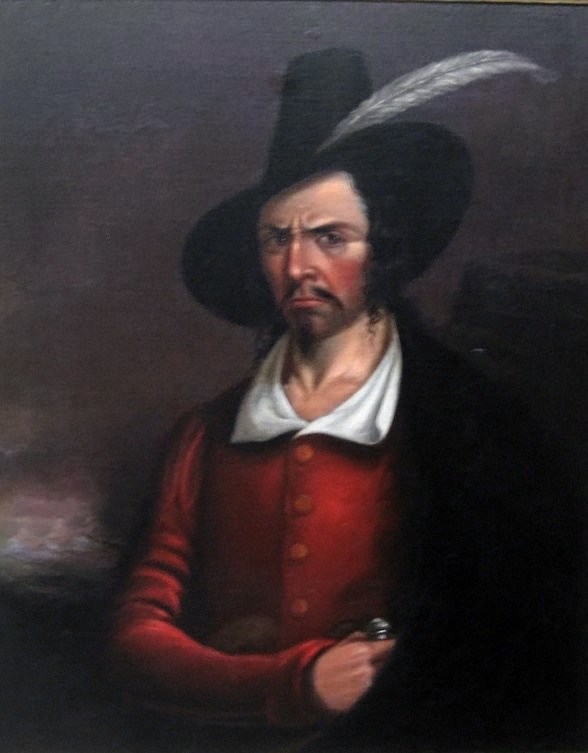
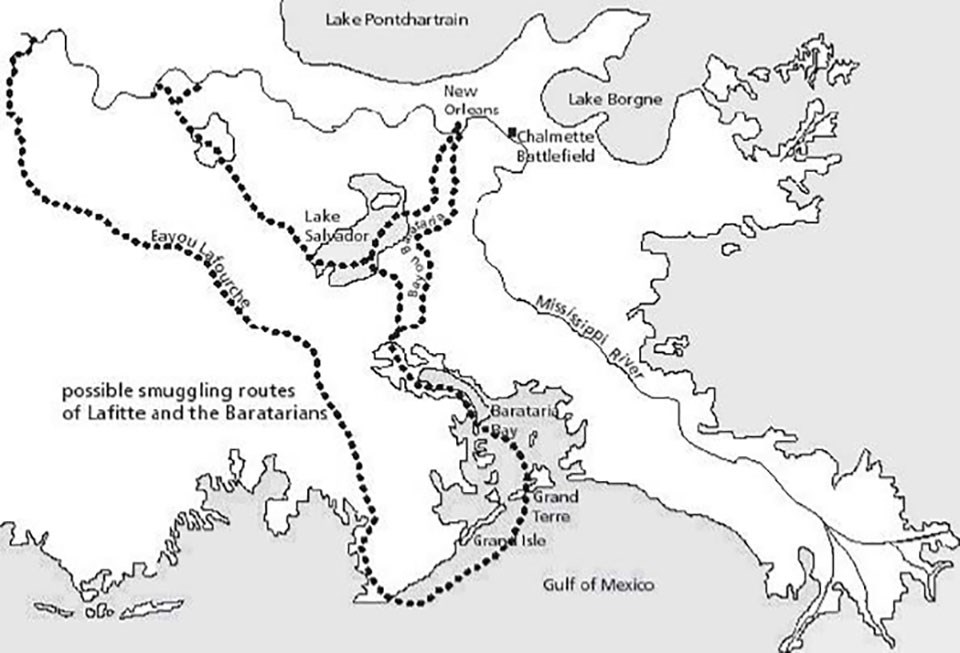
From the Kinja archive. Jean Lafitte's treasure may still be buried somewhere along the Louisiana/Texas Gulf Coast. Unfortunately it might also be underwater by now due to erosion, subsidence, and rising sea levels.
https://en.wikipedia.org/wiki/Jean_Lafitte
https://www.smithsonianmag.com/history/saving-new-orleans-125976623/
http://www.wtblock.com/wtblockjr/jean1.htm
http://jeanlafitte.net/Barataria.htm
The Sketch of Lafitte taken from the Review of 1851, is the most complete ever written of a man who combined in his person the accomplishments of a gentleman with the daring and barbaric instincts of the corsair. Patriot, pirate, smuggler and warrior, there is no character to compare with him except that of Robin Hood, whom he surpassed in audacity and success. The fabulous treasures accumulated by him were squandered or were bountifully distributed, or were hidden away deep in the earth or in the sea marshes. At the junction of the Rigolets and Bayou Sauvage Lafitte built a platform or wharf on which to unload his merchandise and booty.


